Services / Fire Engineering / 02
Retrospective Fire Strategies
For buildings that exist, but whose paperwork does not.
What it is
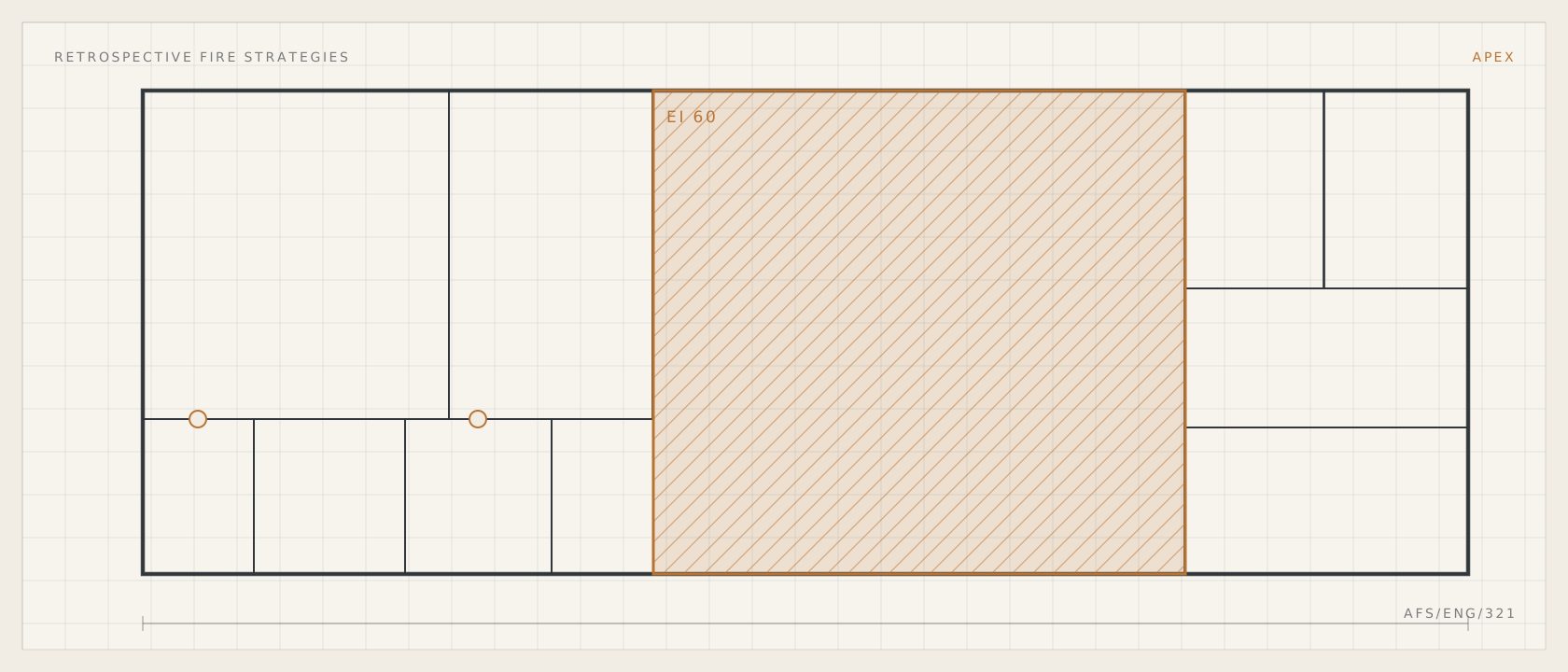
Most buildings predate their paperwork. A retrospective fire strategy surveys the building as it actually stands, establishes the fire safety provisions in place, benchmarks them against current guidance, and records the result as a single authoritative document. It is the foundation for safety cases, Regulation 38 packages, Building Safety Act submissions and informed long-term maintenance — the starting point for a credible golden thread on a building that has never had one. Because we have no installation or remediation arm, our assessment carries no financial interest in what the building turns out to need. The strategy reflects what is genuinely there, the gap it represents, and the proportionate order in which to address it.
When you need it
- No fire strategy exists, or the original is lost or obsolete
- A safety case or building assessment certificate application needs one
- You are buying, selling or refinancing and due diligence has flagged the gap
- Successive alterations have left no single account of the building
What you receive
- A retrospective fire strategy to BS 9999 principles, based on survey evidence
- A gap analysis against current benchmarks, with prioritised recommendations
- Drawings annotated to reflect the building as found
How we do it
- Pre-survey review of any existing documentation — drawings, previous strategies, maintenance records, historical building control information.
- Site survey of the building as found: means of escape, compartment lines, fire systems, structural elements and fire service access, recorded against the available drawings.
- Benchmarking: the as-found position is assessed against the applicable guidance (Approved Document B, BS 9999 or the relevant British Standard for the occupancy) and the gap documented plainly.
- Strategy report and gap analysis issued, with recommendations prioritised by risk — not by cost of remediation.
What drives the cost
Cost depends primarily on building size and complexity — number of floors, compartment count, occupancy type and the number of distinct fire safety systems. The condition of existing documentation is a significant factor: a building with no drawings, no maintenance history and a complicated alteration record requires more survey time than one with a complete record. Where opening-up is needed to establish compartment lines behind finishes, that adds to the programme. We scope each commission individually and provide a fixed fee before starting.
Common questions
Is a retrospective fire strategy legally required?
There is no single regulation that demands one by name. However, safety cases under the Building Safety Act, Regulation 38 handover packages and many insurance and lender requirements all need an authoritative account of the building's fire safety provisions. A retrospective strategy is usually the most efficient way to produce that account for an existing building.
How does a retrospective fire strategy relate to the golden thread?
The golden thread is the running record of safety-relevant information about a building. For a building that has no strategy, the retrospective strategy becomes the founding document — establishing what is currently in place and why. Subsequent alterations and surveys can then be recorded against that baseline rather than into a void.
Can the strategy be used to support a Building Safety Act safety case?
Yes. A safety case report requires a demonstration that the building's fire and structural risks are being managed to a reasonable level. A retrospective strategy, supported by survey evidence and a gap analysis, provides the factual foundation for that demonstration. We can produce both documents or work alongside a principal accountable person's existing safety case team.
What if the survey finds significant deficiencies?
The strategy reports what is there. If deficiencies are found, the gap analysis sets them out in plain terms and prioritises them proportionately — so the responsible person knows what matters most and can take informed decisions about remediation. Because we do not carry out remediation work ourselves, our findings are not shaped by any interest in what the fix should be.
Related services
All servicesFurther reading
All insights