Fire safety for police and secure operational estates
Independent fire risk assessment across custody, operational and residential training sites — one methodology, applied without exception.
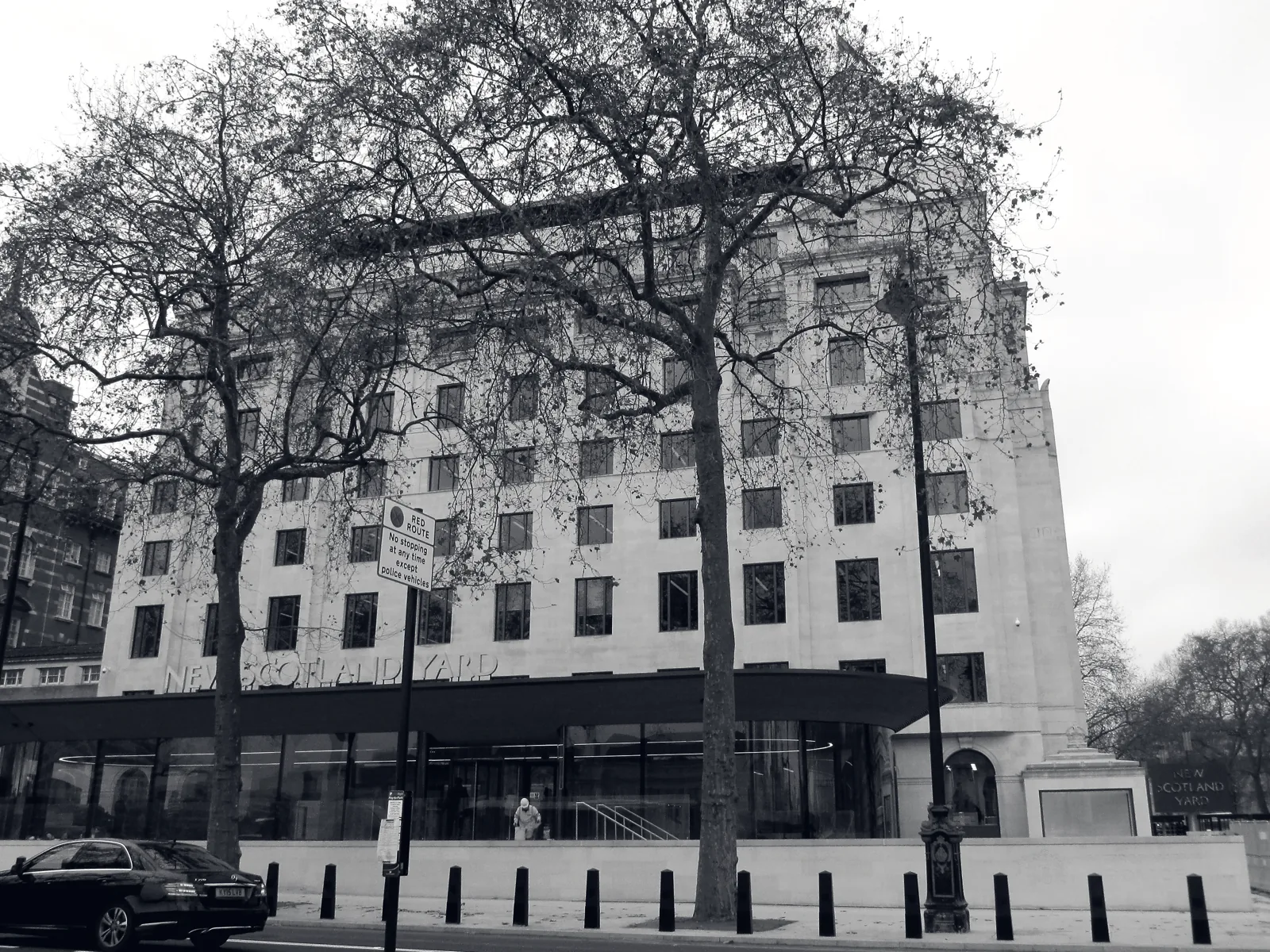
Most fire risk assessment methodology starts from an assumption that does not hold in a custody suite: that occupants can move themselves to a place of safety. Detained persons cannot self-evacuate, and a police estate typically spans several building types at once — custody suites, specialist operational facilities and residential training sites — that share no single normal-use pattern. Apex has carried out a non-intrusive PAS 79 fire risk assessment programme across a police force estate covering all three, assessed to one consistent standard rather than a separate local basis for each.
The regime
The Regulatory Reform (Fire Safety) Order 2005 applies to a police estate in the same way it applies to any other non-domestic premises: the responsible person must ensure a suitable and sufficient fire risk assessment is in place, that significant findings are recorded, and that the measures identified are maintained. Custody suites, specialist operational facilities and residential training sites are all premises within scope of the Order — nothing in the Order itself treats a secure estate differently in principle from an office or a school.
What differs is the risk picture inside a custody suite. Means of escape, compartmentation and fire detection have to be judged against staff-dependent evacuation, not the general assumption that occupants can move themselves to safety — because detained persons cannot. That distinction changes what an adequate response looks like: travel distances matter less than how a fire is expected to be managed and detainees moved before self-evacuation could ever be an option.
Applying one methodology without exception is what makes a mixed estate defensible. Apex assesses custody, operational and residential training sites under PAS 79 throughout, non-intrusively, so the three building types are measured against the same standard and can be reported through the same governance route rather than each accumulating its own separate basis for compliance.
The pressures
- Security constraints — locked doors, controlled circulation, restricted access — interact with means of escape in ways a standard FRA methodology does not automatically capture.
- A single estate spans building types with no shared normal-use assumption: custody suites, operational facilities and residential training sites each need judging on their own risk picture.
- Evidencing a consistent compliance position through one governance route, rather than each site or building type accumulating its own local basis for compliance.
- Staff-dependent evacuation depends on training and management, not just physical provision — the FRA has to reflect how a fire is actually expected to be managed, not just what the building contains.
- Scheduling and access constraints on live operational and secure sites make survey programmes harder to run than on an equivalent commercial estate.
In practice
A large police force in the south of England commissioned fire risk assessments across an estate spanning custody suites, specialist operational facilities and residential training sites — three building types that share no single normal-use assumption. Apex assessed the whole estate under PAS 79 methodology, non-intrusive at every site, judging custody suites specifically against staff-dependent evacuation rather than the general assumption that occupants can move themselves to a place of safety. The force ended the programme with a single, consistent fire compliance standard applied across the estate, rather than each building type carrying its own separate basis for compliance.
Services that apply
All services