01
Proportionate, or nothing
The easiest thing to sell in fire safety is more than you need. We scope to the building and the risk — and we will say so when the right answer is "this doesn't need us."
Approach
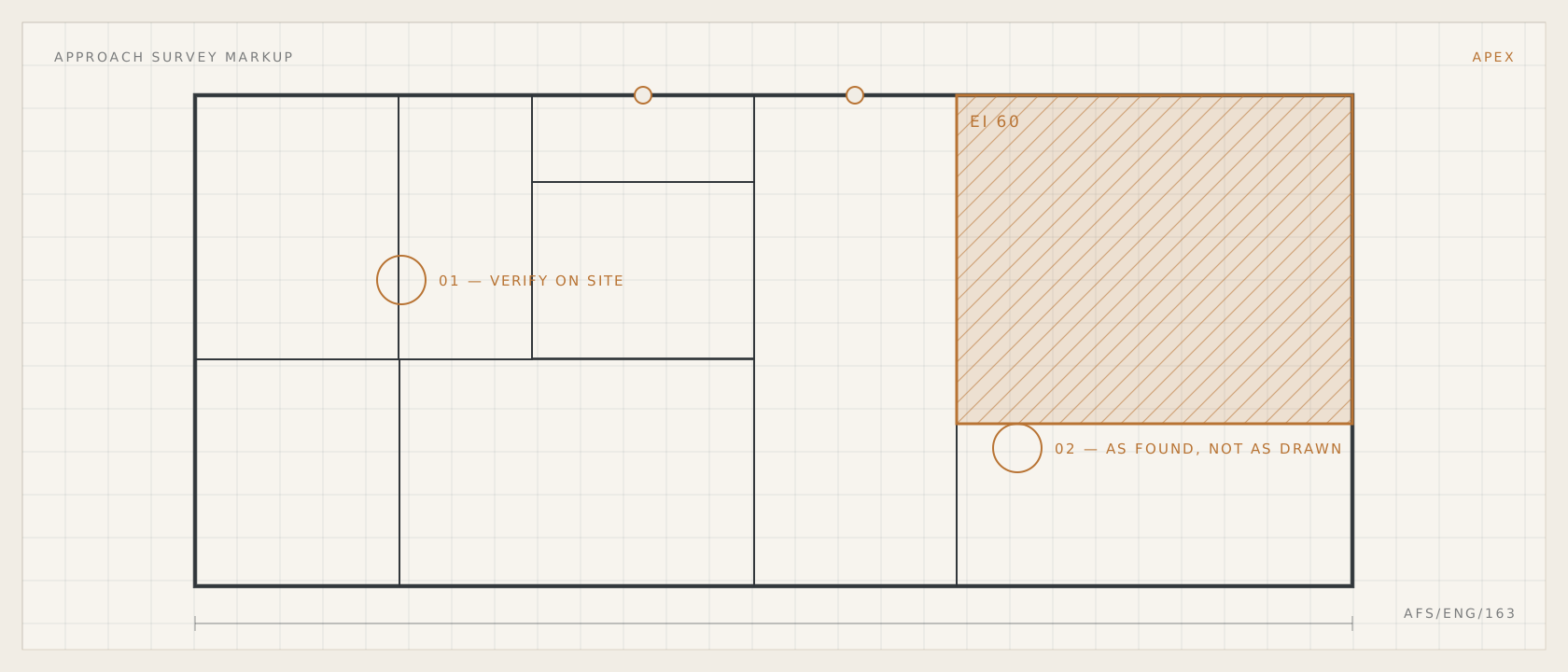
01 — Principles
How we think
01
The easiest thing to sell in fire safety is more than you need. We scope to the building and the risk — and we will say so when the right answer is "this doesn't need us."
02
A finding nobody understands is a finding nobody fixes. Reports are written for the person who must act on them — prioritised, specific, and free of defensive jargon.
03
Conclusions follow from what we observed, measured and read — not from worst-case theatre. Where evidence is missing, we say what is missing and how to get it.
04
We do not sell installation, products or remediation works. Our only interest in a recommendation is that it is right.
02 — Process
Every commission, four moves
01
The brief, the building and the paperwork that exists — drawings, strategies, past reports, maintenance records. Most commissions change shape here, usually getting smaller.
02
Time on site, looking at what is actually there rather than what the documents promise. Intrusive where warranted, non-destructive where not.
03
Findings in plain order of priority: what is fine, what needs attention, what it should cost in effort. Written for the responsible person, readable by their board.
04
Scopes contractors can price, answers to building control, verification of completed work. The job is finished when the action list is, not when the PDF lands.
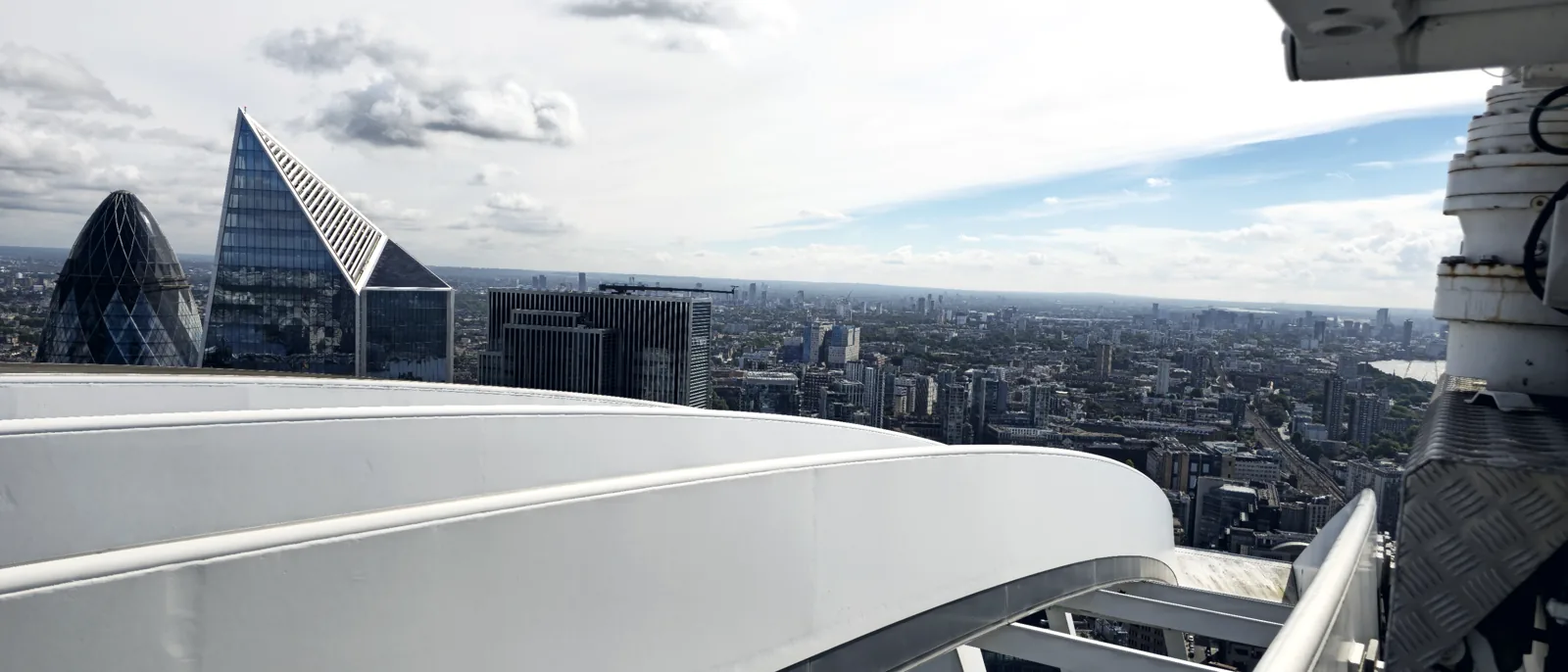
Findings start on the roof, not at the desk
03 — Questions
Asked often, answered straight
For London, the South East and the Home Counties, usually within days rather than weeks — we will give you a date when we confirm scope. Wider UK coverage is arranged per commission.
Every commission is delivered by an appropriately qualified person for that discipline — in-house, or through trusted specialists we engage and remain accountable for. One point of contact either way; the report you receive carries our name and our standard.
No — deliberately. We design, specify and verify remediation, but we do not sell the works themselves. That is what keeps the advice independent.
Scoped and fixed before we start, based on the building and the question — not discovered through variations afterwards. If the scope genuinely changes on site, we tell you before the cost does.
Yes. Multi-site programmes are sequenced by risk, reported in a consistent format, and tracked so portfolio-level progress is visible — not seventeen separate PDFs.
Different questions. A fire strategy sets out how a building is designed to resist and survive fire — escape, compartmentation, systems — and you need one for new work, major change, or where the original is lost. A fire risk assessment is the legal duty for a building in use: it checks what is actually in place and lists what to act on. New or altered building: strategy. A standing building you operate: assessment. Often both, in that order.
The four residential assessment types under BS 9792:2025 differ by how far the assessor looks. Type 1 is the common non-destructive baseline — communal areas and a sample of construction. Types 2 to 4 go progressively further: Type 2 opens up where Type 1 raised doubt, Type 3 adds the inside of dwellings, and Type 4 is the fullest, with destructive sampling of construction and flats. Most blocks need a Type 1; evidence of risk, not habit, is what justifies going deeper.