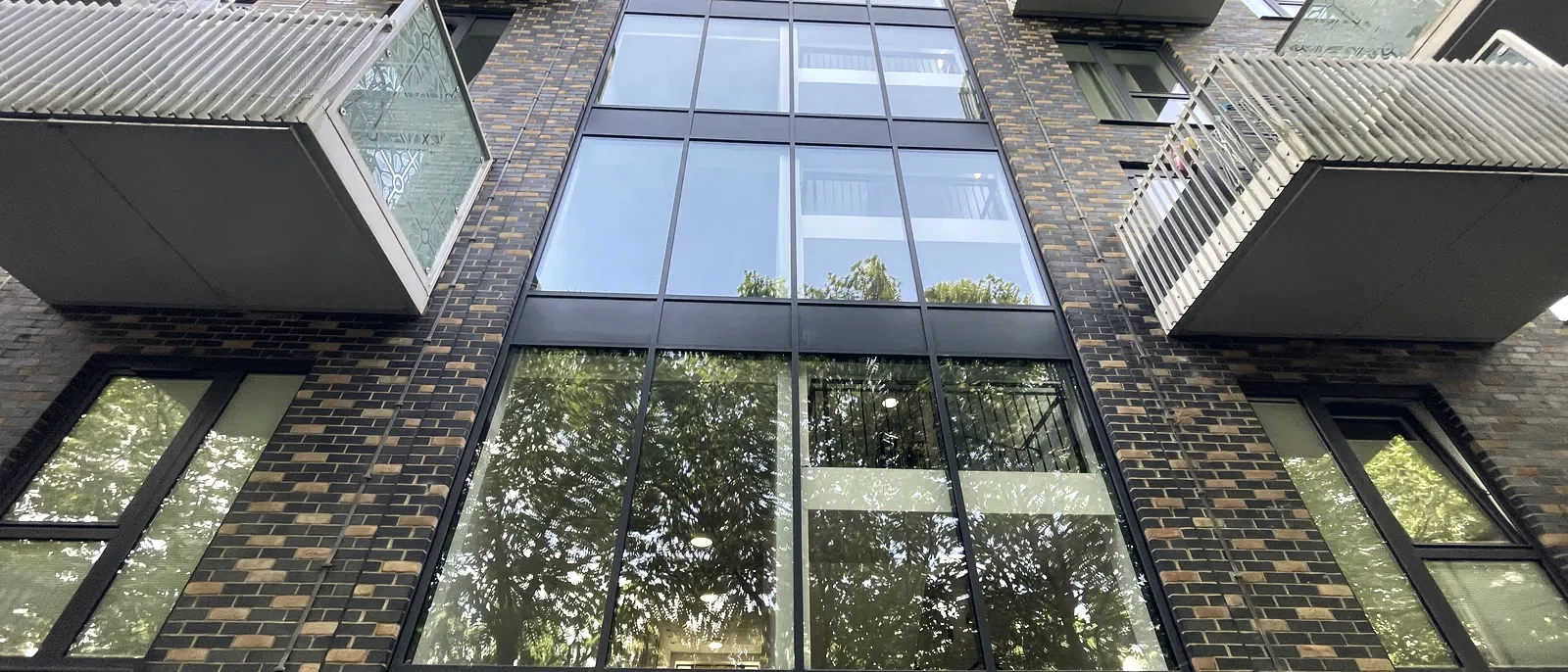
The Building Safety Act 2022 (BSA 2022) is usually discussed as a single regime, but it is more useful to think of it as two regimes joined at a handover point. Part 3 of the Act, and the regulations made under it, put in place a "gateway" approvals process that a higher-risk building (HRB) must pass through during design and construction. Part 4 of the Act then puts in place a separate but connected regime — built around a safety case — for the same building once it is occupied. The gateways exist to make sure the building that reaches occupation is one an accountable person can actually run safely; the safety case regime is how that safety is then maintained for as long as people live there.
This article sets out what the three gateways actually require, and how the handover from Gateway 3 into the occupied-building regime works in practice. It touches on the registration, safety case and resident-engagement duties that follow, but does not repeat them in full — that ground is covered in detail in our companion article on principal accountable person duties.
Which buildings are in scope
An HRB is defined, in both the design/construction and occupied-building parts of the Act, by reference to height or storeys: a building in England of at least 18 metres in height or at least 7 storeys. For the occupied-building regime, the Act adds a further condition — the building must contain at least 2 residential units, and government guidance on the occupation-phase criteria confirms that buildings used entirely as a hospital, care home, secure residential institution, hotel or military barracks fall outside that definition even if they meet the height test.
That last point is worth sitting with. The building types swept into the design-and-construction gateway regime are not always identical to the building types that fall under the occupied-building safety case regime — the two definitions serve different purposes and are set out in different regulations. A building at or near the threshold should have its HRB status checked against the specific regime being asked about, not assumed to be settled once and for all.
Gateway 1: planning
Gateway 1 sits within the town planning system rather than being a separate technical approval. Its purpose is to make sure fire safety is a genuine, evidenced part of a proposal before planning permission is granted, rather than something addressed for the first time once a scheme is on site. For schemes in Greater London this is where the London Plan's Policy D12 fire statement requirement also bites, and the two obligations are commonly answered together at the planning stage.
Gateway 2: the hard stop before work starts
Gateway 2 is where the regime changes most visibly for an HRB. For these buildings, the Building Safety Regulator (BSR) — not the local authority or an approved/registered building control approver acting alone — is the building control authority, and building control approval must be obtained from the BSR before any relevant building work starts. Beginning work without that approval is a criminal offence, not a paperwork lapse.
A Gateway 2 application has to demonstrate, holistically rather than through a box-ticking checklist, how the proposals will comply with the building regulations. In practice that means plans and evidence covering the fire (and structural) safety design itself, the competence of the individuals and organisations who will be doing the design and construction work, the arrangements for managing change during construction, the arrangements for mandatory occurrence reporting of safety-relevant events, and how the golden thread of building information will be created and kept as work proceeds. Nothing about Gateway 2 assumes the building will later be run by an unusually diligent management team — the BSR's stated expectation is that submissions should not rely on optimistic assumptions about future management or occupant behaviour.
Gateway 3: the hard stop before occupation
Gateway 3 is the second hard stop, and it sits at the opposite end of construction. Building control approval must again be obtained from the BSR — this time confirming that the as-built building, including any changes made since Gateway 2 was approved, actually complies with the building regulations — before the building can be registered and occupation can begin. No occupation certificate, no residents.
What passes through Gateway 3 is not only a compliance decision. It is also the point at which the golden thread of information generated through design and construction is expected to be complete, accurate, and ready to be handed to whoever will be responsible for running the building. A Gateway 3 approval that arrives without a usable golden thread behind it has solved the regulatory problem but not the practical one.
From gateway to occupation: what carries over
The golden thread compiled through the gateways does not stop being useful once the building is occupied — it becomes the starting material for the safety case that Part 4 of the Act then requires. Once the building is registered with the BSR, the designated principal accountable person (PAP) takes on the ongoing duties: applying for and maintaining a building assessment certificate, preparing and keeping current the safety case and safety case report, and supporting the resident-engagement rights the Act gives to people living in the building. Those duties are the subject of our companion article; the point to take from this one is that they inherit directly from what the gateway process produced. A rushed or incomplete Gateway 3 handover becomes the new PAP's problem on day one of occupation, not a closed chapter from the construction phase.
Common misconceptions
The first misconception is treating Gateway 2 approval as the point at which the fire safety questions are settled. It is not — Gateway 3 is a separate, later hard stop, and any material change made during construction has to be managed and, where significant, brought back to the BSR rather than assumed to still be covered by the original approval.
The second is assuming that everything in the BSA 2022 only applies above the 18-metre/7-storey HRB threshold. The gateway and safety case regimes are specific to HRBs, but the Act sits alongside separate amendments the Fire Safety Act 2021 made to the Regulatory Reform (Fire Safety) Order 2005, which affect the scope of fire risk assessment duties — including for external walls and common parts — on buildings well below the HRB threshold. HRB status and RRFSO responsible-person duties are not the same question.
The third is assuming the design-stage HRB definition and the occupied-building HRB definition always pick out exactly the same set of buildings, given the shared height test. As set out above, the occupation-phase criteria carve out categories such as hotels and care homes that the design/construction gateway regime does not necessarily exclude in the same way. Where a building's use is mixed or unusual, this is a question worth putting to the BSR directly rather than inferring from the height alone.
Practical next steps
For a project heading toward Gateway 2, the useful discipline is to treat golden thread record-keeping, dutyholder competence evidence, and change-management arrangements as part of the design work from the outset, rather than as a submission exercise assembled once the design is otherwise finished. For anyone inheriting an occupied HRB — as a new PAP, managing agent, or freeholder — the Gateway 3 handover pack is the baseline to interrogate first: is it complete, is it usable, and does it actually match what was built.
Apex supports both ends of that process — advising on the fire safety case for a Gateway 2/3 submission, and reviewing an existing HRB's registration, safety case and information baseline for a PAP taking on responsibility for a building. Because Apex does not sell installation or remediation work, the advice is built around what the specific gateway or safety case actually needs, not what generates follow-on contracting.
Common questions
Does Gateway 2 approval mean construction can proceed without any further sign-off?
No. Gateway 2 approval allows work to start, but Gateway 3 is a separate, later hard stop before occupation, and material changes made during construction need to be managed and, where significant, considered by the Building Safety Regulator rather than assumed to remain covered by the original Gateway 2 approval.
Do the gateways apply to a building that is already occupied?
No. The three gateways are a pre-occupation regime for design and construction. Once a higher-risk building is registered and occupied, it moves into the separate Part 4 safety case regime, which is what our companion article on principal accountable person duties covers in detail.
Is every building over 18 metres or 7 storeys subject to the gateway and safety case regimes?
Height or storeys is the starting test, but it is not the whole test. The occupied-building regime also requires at least 2 residential units and excludes buildings used entirely as a hospital, care home, secure residential institution, hotel or military barracks, even where the height threshold is met. Where a building's use is mixed or borderline, its status should be checked directly rather than assumed from height alone.