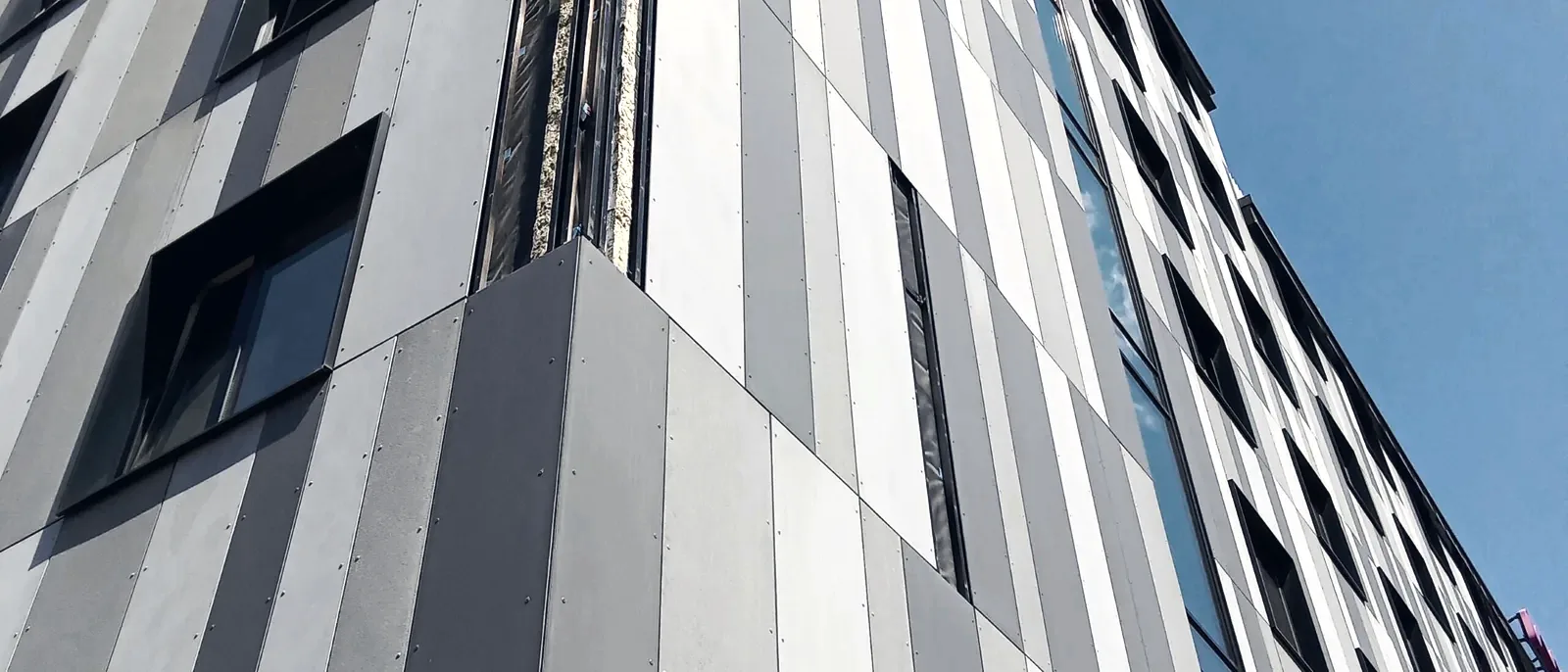
PAS 9980:2022 is a British Standards Institution (BSI) publicly available specification — a code of practice — for appraising the fire risk of external wall construction and cladding on existing multi-storey, multi-occupied residential buildings. The appraisal it defines is usually called a FRAEW: a Fire Risk Appraisal of External Walls. If you own, manage, or live in a block of flats and someone has asked for "a PAS 9980" or "a FRAEW", this is what they mean.
The standard was developed by BSI with the (then) Department for Levelling Up, Housing and Communities and the Home Office, and published in January 2022, in the period after the Grenfell Tower fire when external wall assessment had become inconsistent and, in places, needlessly alarmist. Its purpose is to bring a single, proportionate method to a question that had previously been answered differently by every assessor who was asked it.
Who does this apply to?
PAS 9980 is aimed at existing multi-storey, multi-occupied residential buildings — blocks of flats, and by extension similar buildings such as student accommodation and specialised housing. It is most directly relevant where the external wall construction includes cladding, insulation, balconies or other attachments whose fire performance is not already well understood and documented.
The Regulatory Reform (Fire Safety) Order 2005 (RRFSO) requires whoever is the "responsible person" for a building's common parts to keep a suitable and sufficient fire risk assessment. The Fire Safety Act 2021 put beyond doubt that, for buildings with two or more sets of domestic premises, this duty extends to the building's structure and external walls — including cladding, balconies and windows — not just the common parts in the traditional sense. Where the external wall raises a question the general fire risk assessment cannot resolve on its own, a FRAEW under PAS 9980 is the recognised way of resolving it.
Height is a practical trigger rather than a legal one. As a rule of thumb, buildings with a storey above 11 metres are where an assessor would generally expect to see external wall fire risk actively considered, whether through a FRAEW or through the general fire risk assessment addressing it directly. That is a working benchmark, not a cut-off — a shorter building with an unusual or poorly documented wall construction can just as reasonably need the same scrutiny, and a taller building with simple, well-recorded construction may need very little.
What a FRAEW actually involves
A FRAEW is carried out by a competent assessor — someone with genuine fire engineering knowledge of how external walls behave in a fire, not simply a general practitioner asked to sign a form. The assessor reviews whatever design records, as-built information and previous survey history exist, then inspects the building to whatever extent is needed to understand what is actually there. Where records are good, that inspection can be relatively light-touch; where they are poor or the construction is unknown, more extensive investigation — sometimes including opening up work — is needed before any judgement can be reached.
The appraisal looks at the wall as a system rather than at one material in isolation: the cladding and insulation, but also cavity barriers, fire breaks, balconies and other attachments, and how they interact with the building's height, layout, evacuation strategy and other fire safety measures. That is why a FRAEW is not, and was never meant to be, a simple checklist verdict based on whether a particular material is present somewhere in the wall.
The output is a written appraisal of the fire risk the external wall construction actually presents. Guidance for regulators published on GOV.UK is explicit that a FRAEW can conclude that existing measures (an alarm system, for example) already sufficiently mitigate the risk, and that no further works are required — an acceptable outcome is a genuine, common result, not a technicality.
Common misconceptions
The most persistent misunderstanding is that any combustible material anywhere in an external wall means a building is unsafe and must be reclad. That is not what PAS 9980 says, and it is not how a properly conducted FRAEW is meant to work — the standard exists precisely to move away from that reflexive, zero-risk approach and toward an evidenced judgement about the actual building in front of the assessor.
A second misconception is treating an EWS1 form as the technical assessment itself. The EWS1 form, introduced by UK Finance and RICS, is a short declaration used by lenders and conveyancers to confirm that an external wall assessment has been carried out; PAS 9980 is the technical framework a competent assessor should follow to reach the conclusion the form records. A third is assuming a FRAEW is a one-off box to tick — where a building has since been altered, or new information comes to light, the appraisal should be revisited, and its conclusion should be reflected in the building's current fire risk assessment and, for higher-risk buildings, its safety case.
Practical next steps
If your building has been flagged for external wall attention — by a lender, an insurer, the fire and rescue service, or your own fire risk assessor — the first step is establishing what is actually known about the wall construction: original design information, planning and building control records, and any previous surveys. That determines how much new investigation a FRAEW will realistically need.
When commissioning the appraisal, ask the assessor to confirm their competence in external wall fire engineering specifically, agree the scope of investigation up front rather than after the event, and satisfy yourself that their conclusion is not shaped by any interest in the remediation work that might follow. Apex's PAS 9980 survey service carries out FRAEWs for residential buildings of all types (Apex holds no remediation or installation arm), so the conclusion reflects the evidence in front of the assessor and nothing else.
Common questions
Does having some combustible material in my external wall mean I need a FRAEW?
Not automatically. A FRAEW becomes the right tool where the external wall construction raises a question your general fire risk assessment cannot resolve — for example, cladding, insulation or attachments whose fire performance is not well documented. Many walls, properly appraised, present an acceptable level of risk.
Is a FRAEW the same thing as an EWS1 form?
No. The EWS1 form is a short declaration for lenders and conveyancers. PAS 9980 is the technical methodology a competent assessor follows to reach the conclusion that the EWS1 form then records.
Can a FRAEW conclude that no remediation work is needed?
Yes, and it is a common outcome. PAS 9980 requires an evidence-based judgement of actual risk, not an automatic finding against any combustible content. Government guidance for regulators confirms that a FRAEW can properly conclude that existing measures already mitigate the risk adequately.